Garage floor prep epoxy coating in South Orange County is the single most important step in getting a finish that lasts. Skip the prep, and even the best epoxy will lift, peel, or flake within a year. Here is what proper prep actually looks like, and why it matters for South OC garages.
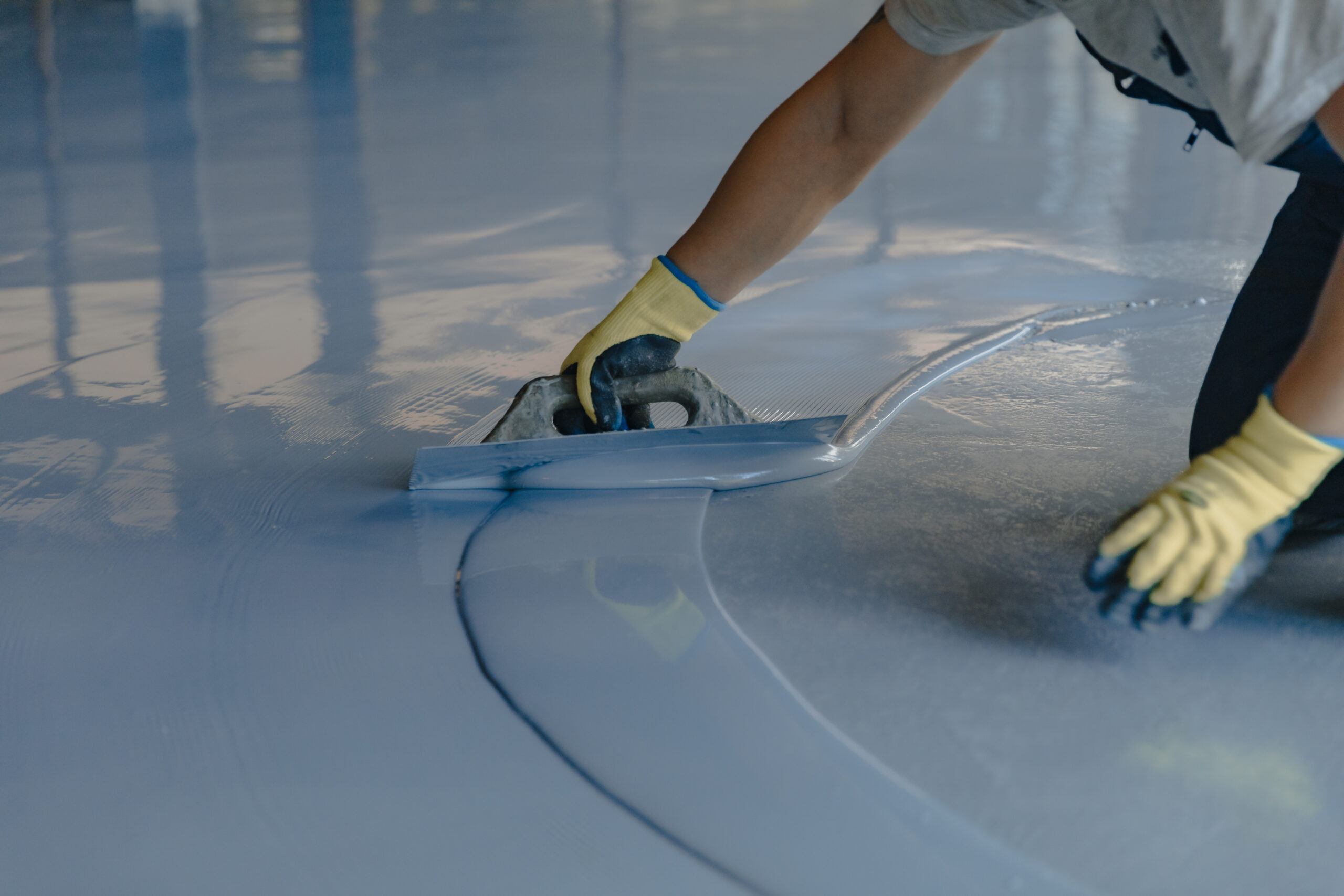
Why Garage Floor Prep Matters More Than the Epoxy Coating Itself
A garage floor coating is only as good as its bond to the concrete. If the surface is dirty, sealed, or uneven, the epoxy has nothing to grip. Most coating failures we see in Rancho Santa Margarita and the surrounding South OC communities trace back to inadequate prep, not bad product. The coating itself is usually fine. The concrete underneath was just not ready. Proper garage floor prep epoxy coating work is what separates a finish that lasts a year from one that lasts a decade.
Step One: Clear and Clean the Garage
Before any prep can begin, the garage needs to be empty. That means cars, shelving, tools, and anything else stored on the floor. Once the floor is exposed, it gets a deep degreaser wash to lift years of oil, brake dust, and tire residue. Pay special attention to the spots where vehicles park, since those areas hold the most contamination.
Step Two: Diamond Grinding or Shot Blasting
This is the step homeowners almost always underestimate. The concrete surface needs to be mechanically opened up using a diamond grinder or shot blaster to create what installers call a CSP-2 or CSP-3 profile. This profile gives the epoxy a rough, porous surface to bond into. Acid etching is sometimes used as a shortcut, but it is not equivalent and is one of the leading causes of peeling coatings under hot tires in our climate.
Step Three: Crack and Joint Repair
South OC homes built in the 1990s and 2000s often have hairline cracks or saw-cut control joints in the garage slab. These need to be cleaned out, filled with a flexible polyurea or epoxy crack filler, and ground flush before the coating goes down. Skipping this step almost always leads to the cracks reappearing through the new coating within a season.
Step Four: Moisture Test
Concrete slabs in coastal Orange County can carry surprising moisture levels, especially in older homes without a vapor barrier underneath the slab. A simple plastic-sheet moisture test or a calcium chloride test tells the installer whether a moisture-mitigating primer is needed. Coating over a wet slab is a recipe for blistering and adhesion failure.
Step Five: Final Vacuum and Tack Wipe
After grinding, repair, and moisture checks, the floor is vacuumed thoroughly to remove all dust and a tack wipe is done immediately before the primer goes down. Even a thin layer of dust between the concrete and the epoxy will compromise the bond.
What to Ask Before Hiring a Coating Installer in South OC
If you are getting estimates for an epoxy garage floor coating in Rancho Santa Margarita or anywhere in South OC, ask the installer to walk you through their prep process. If they mention only acid etching, or if prep is bundled into a vague one-line item on the estimate, that is a yellow flag. A reputable installer will spend more time prepping than they will spend applying the coating itself.
The Bottom Line on Garage Floor Prep Epoxy Coating
Garage floor prep epoxy coating work in South OC is unglamorous, time-consuming, and absolutely essential. A garage floor that is properly prepped will hold a coating for 10 to 20 years. A garage floor that is rushed through prep will need to be redone in 2 to 3. The difference is entirely in the preparation. Get a free in-home estimate from a vetted local installer who treats prep as the most important step in the project.
For background on industry-standard concrete surface profiles for coatings, see the International Concrete Repair Institute (ICRI) Concrete Surface Profile guidelines, which most reputable installers reference.
You can also review the EPA Indoor Air Quality guidance for tips on ventilation during any coating installation.